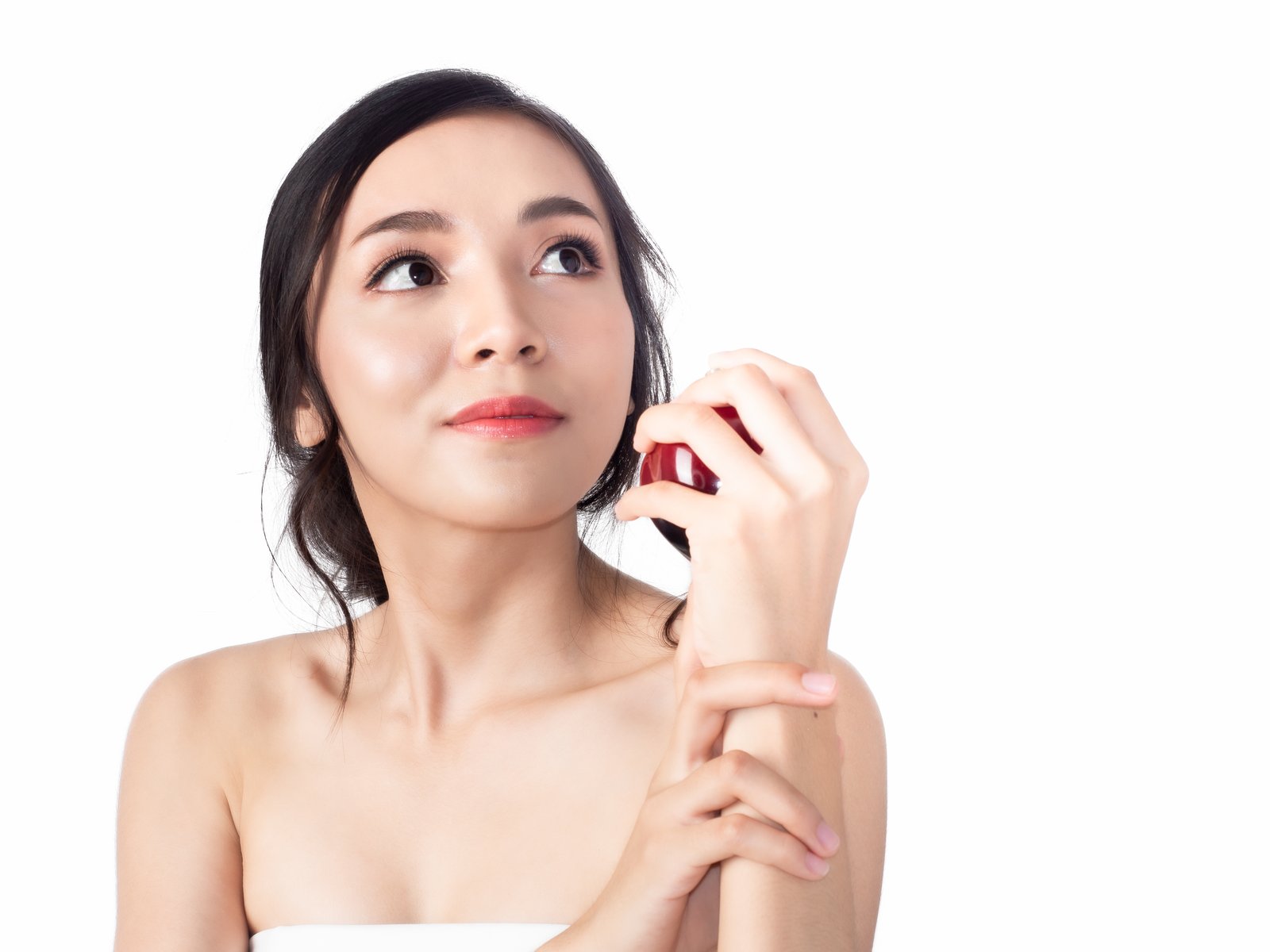
I once handed a retouched headshot to an art director and she looked at it for about three seconds before saying, “He looks like he’s made of wax.” She wasn’t wrong. I had spent two hours with the Healing Brush going over every pore, every shadow, every hint of texture, until the skin was perfectly smooth. Perfectly fake.
That was early in my agency days, and it was the moment I realized I had been solving the wrong problem. The goal was never to remove skin. The goal was to remove distractions while keeping skin looking like skin.
What “Skin Texture” Actually Is in a Pixel Grid
Here’s what most beginners don’t understand: skin information in a photograph lives on two separate visual layers that are blended together in the final image. The first is tone and color. That’s the uneven redness around the nose, the shadow under the jawline, the dark spot from a blemish. The second is texture. That’s the actual surface detail, the pores, the fine lines, the natural grain that tells your brain “this is a real human face.”
When you paint over skin with the Healing Brush or clone directly without any separation, you are destroying both at the same time. You fix the red spot but you also smear the texture around it into a blurry mess. That’s the wax look. Frequency separation is the technique that splits those two things apart so you can fix tone without touching texture, and vice versa.
Setting Up Frequency Separation in Three Steps
The setup takes about 90 seconds once you know it. Start with your retouched layer stack flattened to a new merged layer. In Photoshop, use Ctrl+Alt+Shift+E (Cmd+Option+Shift+E on Mac) to stamp everything visible onto a new layer. Duplicate that layer so you have two identical copies. Name the bottom one “Low Frequency” and the top one “High Frequency.”
On the Low Frequency layer, go to Filter, Blur, Gaussian Blur. For a portrait shot at standard resolution around 3000 to 4000 pixels on the long edge, use a radius of 4 to 6 pixels. You want the blur strong enough to eliminate texture but still show the tonal shapes of the face. On the High Frequency layer, go to Image, Apply Image. Set the layer to your Low Frequency layer, set Blending to Subtract, Scale to 2, Offset to 128. Then change the High Frequency layer’s blend mode to Linear Light. Your image should look exactly like it did before. If it doesn’t, something is off in the Apply Image settings.
Now here’s what you have: the Low Frequency layer holds all the color and tonal information with zero texture. The High Frequency layer holds all the texture with no color. You can paint on one without disturbing the other.
Fixing Tone Without Destroying Texture
Work on the Low Frequency layer. This is where you fix blotchy skin, uneven color, and shadow problems. The best tool here is a very large, very soft brush set to low flow. I usually start at 10 to 15 percent flow and use Alt+click to sample nearby skin tone, then paint gently over the problem area. Because there’s no texture on this layer, your brush strokes blend color smoothly without smearing any surface detail.
For blemishes that are more structural, a large Healing Brush at around 50 to 70 percent hardness works cleanly on the Low Frequency layer. You’re healing the discoloration, not the pore pattern, so the results stay natural.
Cleaning Up Texture Without Flattening It
Switch to the High Frequency layer for anything that’s about surface structure. Stray hairs crossing the skin, a single deep pore that caught harsh light, a small scar that reads as distracting. The Clone Stamp tool is your primary tool here, and I set it to 100 percent opacity, 100 percent hardness, and a small brush size, usually 10 to 20 pixels depending on the detail. Sample close to the problem area and clone carefully. Because you’re only working with texture data and no color, the result blends in naturally.
One thing I see students do wrong: they use a feathered brush on the High Frequency layer and end up blurring the texture instead of replacing it. Hard edges, small brush, short strokes. Treat it like surgery, not painting.
The Dodge and Burn Pass That Ties It All Together
After frequency separation, I always do a final dodge and burn pass on a separate 50 percent gray layer set to Overlay blend mode. Create a new layer, fill it with 50 percent gray (Shift+F5, choose 50 percent gray), and set it to Overlay. Now paint white with a low-opacity soft brush to lighten, or black to darken. This is where you sculpt the light, reinforce cheekbones, soften a transition that frequency separation left a little abrupt.
I once spent three videos going back and forth with a student about whether this step or Curves adjustments was the better finishing move for skin. My position was dodge and burn because it’s spatial and intuitive. His was Curves because it’s precise and measurable. Honestly, we were both right, and the argument was more useful than either of us expected, because it forced me to articulate exactly what each tool is good at. Dodge and burn handles local contrast. Curves handles global tone. Use both.
The single biggest mistake in skin retouching is trying to fix color, texture, and light all at once with one tool. Separate those problems first, solve them independently, then put the image back together. Everything else follows from that.
Comments
Leave a Comment